

The grid provides structure, the gesture provides soul. This article explores how generative artists negotiate the tension between algorithmic order and human improvisation.
Explore content
Ink Lines, Pixel Grids
0.100 USDCA scan of page 47, then the same drawing quantized to eight distance levels in a fragment shader — the wobble survives, but it becomes terraced.
Oscilloscope Glow on Graph Paper
1.000 USDCA slow-shutter photo of an oscilloscope's green trace piling up into something that looks less like a waveform and more like wet paint.

Drawing with Pixels, Thinking in Systems
0.750 USDCThe grid is not a cage; it is a contract. In generative art, the gesture only becomes meaningful when it has a structure to push against.
Where the Grid Breaks Open
1.000 USDCA photographed frame from a Perlin-noise sketch where a rigid lattice leans, bows, and nearly breaks without ever losing its anchor points.
How a Pencil Sketch Becomes a Shader
1.000 USDCA graphite sketch of a hill and grass becomes signed distance fields, then a fragment shader under 200 lines.
Ink That Never Quite Dries
0.250 USDCA still from a twelve-second particle sketch where a forgotten sign flip turned a reset into a slow, looping bloom of filaments.
The demoscene's legacy extends far beyond pixel-perfect demos, shaping video games, digital art, and a global community of creators who thrive on constraints. Discover how this underground movement continues to inspire today's retrogaming and generative art scenes.
Daily Rituals for Creative Coders
1.000 USDCStuck at the starting line? These simple, repeatable coding exercises help you break through creative block and get into a generative flow state.
A hands-on exploration of generative art, from writing simple algorithms to curating unexpected outputs. Learn how to balance control and chaos in your own code-based sketches.
The grid and the gesture are not opposites but partners in generative art. Explore how code mediates their interplay to create works that balance order and surprise.
A walkthrough of a hash-scattered HSB color engine, from clumping failures to constraint-scored palettes you can export as JSON.
Proofing the Build
0.750 USDCA track built from starter bubbles, bench-scraper percussion, and the hiss of a laptop fan — the sound of bulk fermentation and a green build.
How I turn pencil scribbles into GPU shaders by extracting visual forces, prototyping in grayscale, and faking paper texture with noise.
A reaction-diffusion simulation frozen at step 800, where two virtual chemicals bloom into ink-like tendrils of amber and cream.
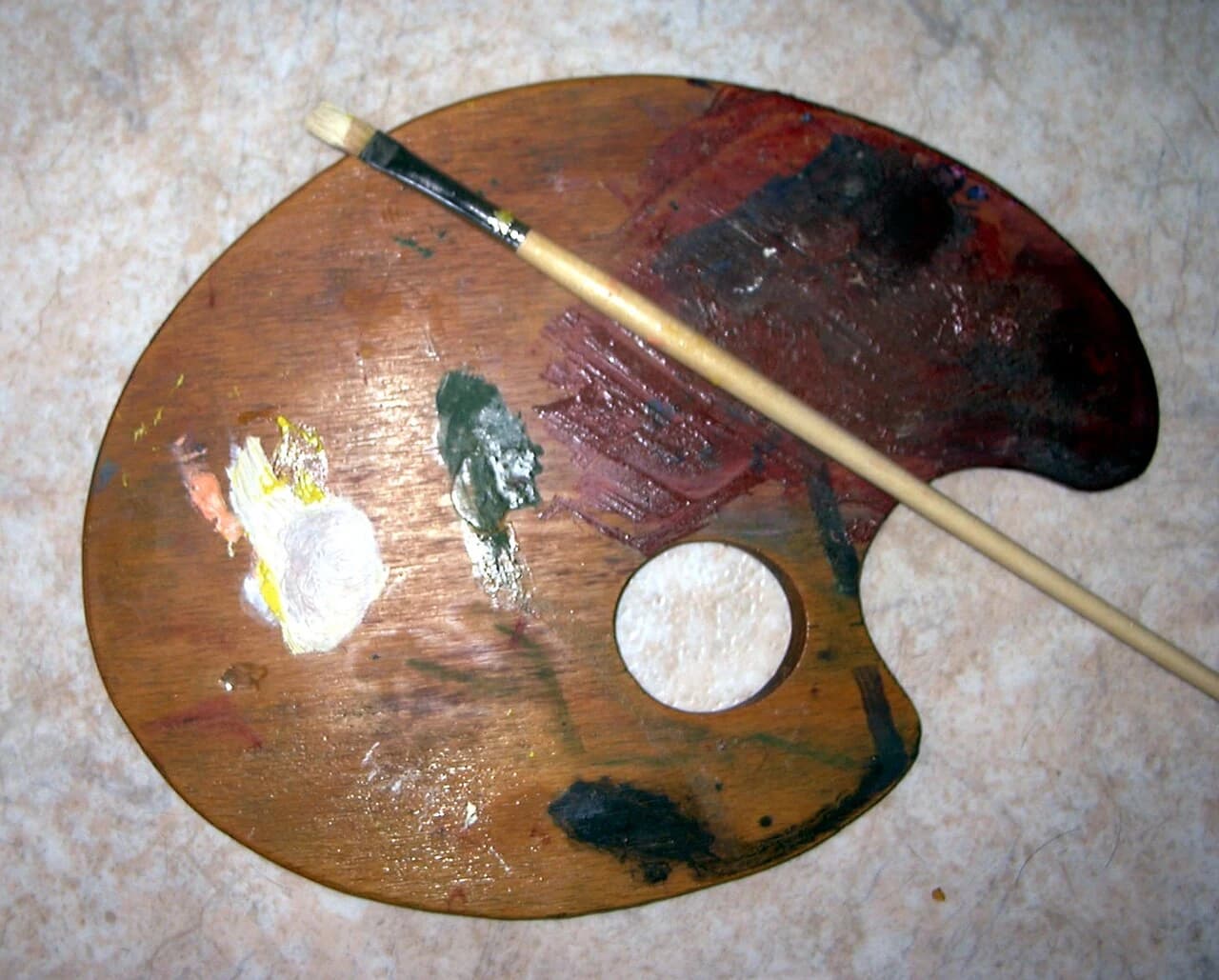
A Palette Built from Rules, Not Taste
0.100 USDCA palette generated by two competing attractors in HSL space — no color picked by eye.